Professional Scale Installation, Maintenance & Calibration Services for Idaho Farms, Ranches & Mines
August 10, 2026 6:33 pmAccurate weighing matters across the Magic Valley, where farms, feed operations, ranches, processors, trucking operations, and industrial sites depend on reliable weight data every day. Dust, heavy loads, outdoor exposure, vibration, and constant equipment traffic can all affect scale performance over time.
Professional scale installation, maintenance, and calibration help Idaho operators keep weighing equipment dependable, identify problems before they create costly disruptions, and prepare commercial scales for the accuracy requirements that apply to weighing devices used in trade.
Quick answer: Farms, ranches, mines, and other commercial operations in the Magic Valley should have scales installed correctly, checked routinely, and serviced when readings become inconsistent or equipment shows signs of wear. Commercial weighing devices used to buy or sell products are also subject to Idaho Weights & Measures requirements, so service and calibration should be considered part of normal operational planning.
What local operators should know
Commercial scales used for buying or selling in Idaho are subject to state licensing and inspection requirements.
Heavy agricultural traffic around Twin Falls, Jerome, Burley, and surrounding communities can put substantial wear on vehicle and livestock scale components.
Dirt, mud, crop debris, moisture, and winter conditions can interfere with scale decks and moving components.
Calibration does not replace mechanical maintenance when a scale has damaged, binding, or deteriorated components.
Planning service before harvest, shipping peaks, or other high-volume periods can help reduce operational disruption.
Why Scale Service Matters Across the Magic Valley
Scale service matters across the Magic Valley because accurate weights can directly affect inventory, transactions, production records, hauling decisions, and day-to-day efficiency. A small weighing problem can become much more disruptive when hundreds of loads, animals, materials, or commodities pass across the same equipment.
Agricultural and industrial operations throughout Twin Falls County, Jerome County, Cassia County, and Minidoka County regularly deal with dust, heavy vehicle traffic, temperature changes, moisture, and debris.
Rockwell Scales provides scale services for operations in the Magic Valley. We focus on helping local customers keep weighing equipment functional, accurate, and suited to the demands of their work.
Local Scale Requirements and Field Conditions
Commercial scales in Idaho must meet state requirements when they are used to determine the quantity involved in a sale or other commercial transaction. The Idaho State Department of Agriculture says commercial weighing and measuring devices must be licensed annually and are tested for accuracy and compliance with applicable requirements.
Idaho also incorporates NIST Handbook 44 requirements for commercially used weighing devices. A newly installed commercial device must be reported to Idaho Weights & Measures, and state guidance distinguishes service-company testing from the state’s official inspection and approval process.
In the field, regulatory requirements are only part of the picture. A scale at a feed operation near Jerome may face very different conditions from a truck scale at an aggregate or mining site, or a livestock scale used on a ranch outside Burley. Service should account for how the equipment is actually being used.
How Scale Problems Affect Local Operations
Scale problems can affect revenue, workflow, recordkeeping, loading decisions, and confidence in every measurement that follows. For Magic Valley businesses moving high volumes of agricultural commodities, livestock, feed, aggregate, or other materials, inconsistent readings can create questions that extend well beyond the scale itself.
A scale that will not return to zero can delay trucks. An unstable reading can require repeated weighing. Mechanical interference beneath a deck can affect performance. Damaged cables or load-cell problems may lead to intermittent errors that are difficult for operators to predict.
Reliable equipment helps crews spend less time questioning weights and more time moving work forward.
Warning Signs Your Scale Needs Service
A scale should be professionally checked when its readings become inconsistent, it stops returning to zero normally, or physical problems begin affecting operation. These warning signs are especially worth watching on outdoor and high-use equipment around the Magic Valley.
Common signs include:
The same load produces noticeably different readings.
The display does not consistently return to zero.
Readings drift while a stationary load remains on the scale.
The deck rubs, binds, rocks, or appears obstructed.
Mud, crop material, gravel, ice, or other debris accumulates around moving areas.
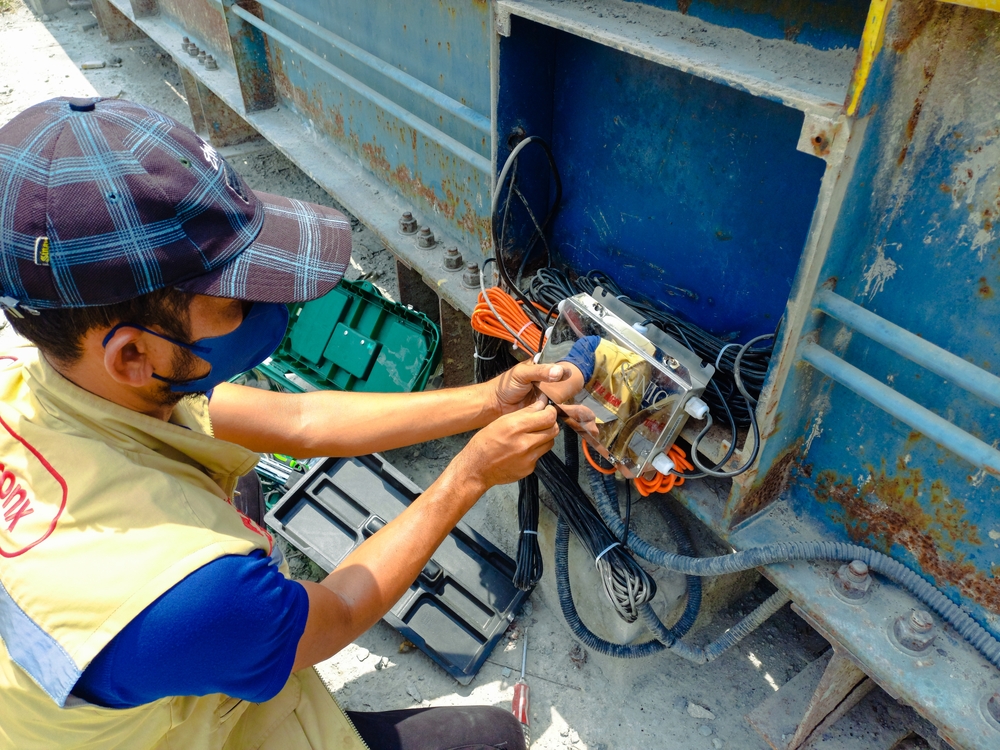
Cables, junction boxes, indicators, or other components show visible damage.
A scale begins behaving differently after unusually heavy loading or equipment impact.
Operators repeatedly need to reweigh loads to feel confident in the result.
When to Call a Scale Professional
Call a scale professional when basic cleaning and visual checks do not resolve inconsistent performance or when adjustment, calibration, electrical work, or component repair may be required. Operators can monitor cleanliness and visible condition, but commercial weighing accuracy should not be treated as a trial-and-error adjustment.
This is particularly important before busy periods such as harvest, livestock shipping, or sustained material hauling. If a scale is central to daily production, dealing with a developing problem before peak use can reduce the chance of a more disruptive failure.
For commercially used equipment, service should also be coordinated with applicable Idaho Weights & Measures requirements.
Common Causes of Scale Trouble in Southern Idaho
The most common scale problems in Southern Idaho come from contamination, mechanical interference, component wear, electrical issues, and changing site conditions. Outdoor installations can experience several of these conditions at once.
Debris buildup: Dirt, gravel, manure, crop material, and other debris can collect around a scale and interfere with free movement.
Heavy repetitive loading: Farms, feed yards, ranches, aggregate operations, and mines can send substantial daily traffic across weighing equipment.
Moisture and weather exposure: Rain, snow, ice, irrigation-related moisture, and freeze-thaw conditions can create added challenges for outdoor systems.
Impact or physical damage: Vehicles, loaders, livestock activity, and material handling equipment can damage scale components or surrounding structures.
Electrical or load-cell problems: Wiring, connections, indicators, junction boxes, and load cells can eventually require testing or repair.
Preventive Scale Maintenance
Preventive scale maintenance should combine routine operator inspections with scheduled professional testing appropriate to the equipment and workload. Around Twin Falls and the wider Magic Valley, maintenance is especially useful before periods when scale downtime would create the greatest operational headache.
Keep the area around the platform or deck reasonably clear. Watch for new gaps, rubbing, standing water, damaged cables, loose hardware, or unusual indicator behavior. Record recurring problems instead of repeatedly resetting equipment without investigating the cause.
For commercial scales, professional work should be performed with applicable state requirements in mind. Idaho requires commercially used weighing devices to be inspected, and its rules address placing serviced or repaired equipment back into operation.
What to Expect From Professional Scale Service
Professional scale service should help determine whether a weighing problem comes from calibration, mechanical condition, electronics, installation, or a combination of factors. The goal is not simply to change the displayed number but to identify what is affecting dependable operation.
Depending on the equipment and its condition, service may involve inspection, cleaning recommendations, troubleshooting, repair, adjustment, testing, or calibration.
After service, operators should have a clearer understanding of the scale’s condition and any remaining maintenance needs. Commercial users should also understand that private service does not replace Idaho’s required state inspection where one applies.
Common Scale Maintenance Mistakes
The biggest scale maintenance mistakes are ignoring changing readings, treating calibration as a cure for mechanical problems, and postponing service until the equipment stops working.
Mistake: Recalibrating without addressing debris or binding.
Consequence: The underlying mechanical problem remains.
Better approach: Inspect the complete weighing system before making accuracy adjustments.
Mistake: Waiting until harvest or another peak operating period to schedule service.
Consequence: Downtime can occur when the scale is needed most.
Better approach: Plan preventive checks before seasonal traffic increases.
Mistake: Assuming a passing reading means the surrounding scale structure needs no attention.
Consequence: Wear or contamination may continue developing.
Better approach: Combine accuracy testing with routine physical inspection.
A Common Magic Valley Scale Scenario
A common Magic Valley scenario is an outdoor scale that performs normally for months, then begins showing inconsistent zero or repeatability after sustained traffic and debris buildup. This is not a case study, but it reflects the kinds of conditions agricultural and industrial scales commonly encounter.
An operator may initially suspect calibration. Inspection could reveal that the scale needs cleaning, mechanical attention, electrical troubleshooting, calibration, or several of those services together.
That is why diagnosing the entire weighing system is more useful than assuming every inaccurate reading has the same cause.
Scale Installation, Maintenance and Calibration Solutions
Scale installation, maintenance, repair, and calibration address different stages of the equipment life cycle and often work together. Proper installation establishes the foundation, preventive maintenance helps preserve operation, repairs address failed or worn components, and calibration verifies and adjusts weighing performance as appropriate.
For farms, ranches, mines, processors, and other Magic Valley operations, we can help evaluate scale service needs based on equipment type, operating conditions, and how critical the scale is to daily work.
Comparing Reactive and Preventive Scale Service
Preventive service is generally the better choice for equipment that is essential to daily operations, while reactive service addresses problems after performance has already declined.
Reactive service may be unavoidable after sudden damage or equipment failure. Preventive maintenance, however, creates an opportunity to identify wear, contamination, or changing performance before the scale becomes unreliable.
For high-volume sites around Twin Falls, Jerome, Burley, and nearby agricultural communities, scheduling service around operational cycles can be more practical than waiting for an unexpected problem during a busy shipping period.
Scale Service Areas in the Magic Valley
Scale service in the Magic Valley supports agricultural, ranching, industrial, and material-handling operations throughout the broader Southern Idaho region. Relevant communities include Twin Falls, Jerome, Burley, Kimberly, Buhl, Gooding, Rupert, and surrounding rural areas.
Service needs vary by equipment type and location, especially for remote ranch, farm, quarry, or industrial sites.
The Cost of Ignoring Scale Problems
Ignoring scale problems can turn a manageable maintenance issue into unreliable measurements, operational delays, additional repairs, or difficulty using a commercial device. Waiting is especially risky when one scale handles a large share of a facility’s incoming or outgoing traffic.
Idaho states that commercially used devices that fail applicable tolerance or function requirements may be rejected and require repair. For an operation that depends on weighing every truck or commodity load, avoiding preventable problems is far easier than reorganizing work around unavailable equipment.
Frequently Asked Questions About Scale Service in Idaho
How often should a farm scale be calibrated in the Magic Valley?
The right calibration schedule depends on workload, scale type, environment, and how critical the measurements are. High-use outdoor farm scales may need more frequent attention than lightly used equipment. Routine monitoring plus scheduled professional service can help identify changes before they affect a busy harvest or shipping period.
Does Idaho inspect commercial scales?
Yes, Idaho State Department of Agriculture Weights & Measures tests commercially used weighing devices for accuracy and compliance. Idaho says commercial devices used in buying or selling must be licensed annually, and the state inspection is separate from testing performed by a service company.
What can cause a truck scale near Twin Falls to become inaccurate?
Debris, binding, component wear, electrical problems, impact damage, and changing site conditions can all contribute to truck-scale problems near Twin Falls. Because several issues can produce similar symptoms, troubleshooting should examine the full weighing system rather than assuming the scale simply needs an adjustment.
Can dirt under a scale affect its readings?
Yes, accumulated dirt or material can interfere with a scale if it restricts parts that need to move freely. Magic Valley agricultural and industrial sites can expose outdoor scales to soil, gravel, crop debris, manure, mud, and other material, making routine visual inspection and housekeeping worthwhile.
Should I service a scale before harvest?
Yes, pre-harvest service can be a practical choice when a scale will see substantially heavier use during harvest. Scheduling inspection, maintenance, and any needed calibration beforehand gives Magic Valley operators an opportunity to address developing problems before truck traffic and commodity movement reach their busiest period.
Are livestock scales subject to Idaho weighing requirements?
Livestock scales used commercially can fall under Idaho’s commercial weighing-device requirements. State service documentation specifically addresses livestock and vehicle scales, and commercial devices are subject to applicable licensing and inspection rules. Operators should confirm the requirements that apply to their particular scale and use.
Is professional calibration the same as Idaho state inspection?
No, service-company testing does not replace Idaho’s official inspection requirement for a commercial device. The Idaho State Department of Agriculture explains that an authorized service person may place certain equipment into service after installation or repair, but the state retains its inspection role.
When should a Magic Valley mine or aggregate operation call for scale service?
Call for service when readings become inconsistent, the scale will not zero correctly, components appear damaged, or weighing delays begin affecting truck movement. At high-traffic aggregate and mining sites, catching mechanical or electrical problems early can help prevent a smaller equipment issue from becoming a larger operational disruption.
Keep Your Magic Valley Weighing Operations Moving
Reliable weighing equipment supports smoother transactions, better records, and fewer interruptions for farms, ranches, mines, and industrial operations across Southern Idaho. We can help identify the installation, maintenance, repair, or calibration service appropriate for your equipment and operating conditions.
Categorised in: Scale Services
This post was written by admin