Portable Livestock Scales for Montana’s Multi-Pasture and Remote Ranch Operations
September 27, 2026 4:31 pmMoving cattle between pastures is part of ranch management across north-central Montana, but moving cattle back to a permanent scale every time a weight is needed can add handling, hauling, and labor. For ranches operating across multiple pastures, leased ground, or remote working areas outside Great Falls, a portable livestock scale can bring weighing capability closer to the herd.
Portable livestock scales give ranchers a practical way to collect weights at different working locations rather than depending entirely on one fixed weighing site. The right setup depends on herd size, handling facilities, terrain, transportation needs, power availability, and how frequently the scale will be moved.
What Montana Ranchers Should Know
- A portable livestock scale can support weight checks at multiple pastures, corrals, and temporary working locations.
- Ranches around Great Falls, Cascade County, and the broader north-central Montana region may need equipment that can handle long distances between working sites.
- A scale still needs a stable, suitable setup location to produce useful, repeatable measurements.
- Platform size, capacity, portability, indicator protection, and compatibility with existing handling equipment should all be considered before ordering.
- Ranchers who regularly move cattle across county lines should separately confirm applicable Montana livestock inspection and transportation requirements.
Why Portable Livestock Scales Matter for Montana Ranch Operations
Portable livestock scales matter for Montana ranch operations because they allow weighing equipment to follow cattle through a multi-pasture system instead of requiring every weighing event to happen at a permanent facility. That flexibility can be especially useful where cattle are worked at locations separated by substantial driving distances.
Around Great Falls, ranch operations can extend well beyond a single headquarters or set of corrals. Properties and grazing ground may be spread across Cascade County and toward communities such as Belt, Vaughn, Sun Prairie, Ulm, and Fort Benton.
That geography changes the practical value of portability. A scale that works well at headquarters may not solve the same problem as equipment designed to be transported and set up where cattle are already being gathered.
Rockwell Scales serves customers looking for weighing equipment suited to their operating needs. When helping ranchers evaluate a portable livestock scale, we focus on matching the scale configuration to how and where it will actually be used.
Local Data and Ranch Operating Conditions
Montana livestock movement rules make planning cattle handling and transportation an important part of ranch operations. The Montana Department of Livestock states that cattle and horses generally require brand inspection before crossing a county line, leaving the state, changing ownership, being sold at a livestock auction, or going to slaughter at a licensed establishment.
The department also provides adjoining-county grazing permits under specified conditions for livestock moving to and from qualifying grazing land.
Those rules do not determine which livestock scale a ranch should buy, but they illustrate why cattle movement is more than a simple matter of loading a trailer. For operations using ground in more than one area, bringing weighing equipment to the working site can sometimes be more practical than moving cattle solely to obtain weights.
How Remote Weighing Can Affect Ranch Management
Remote weighing can give ranchers another source of information when making management decisions without requiring every animal to return to a central scale location. Accurate weights can support decisions involving animal performance, sorting, marketing preparation, and other weight-dependent management tasks.
The benefit depends on how the information will be used. A ranch checking cattle at several points during the season may have different equipment needs than an operation that primarily weighs animals before shipping.
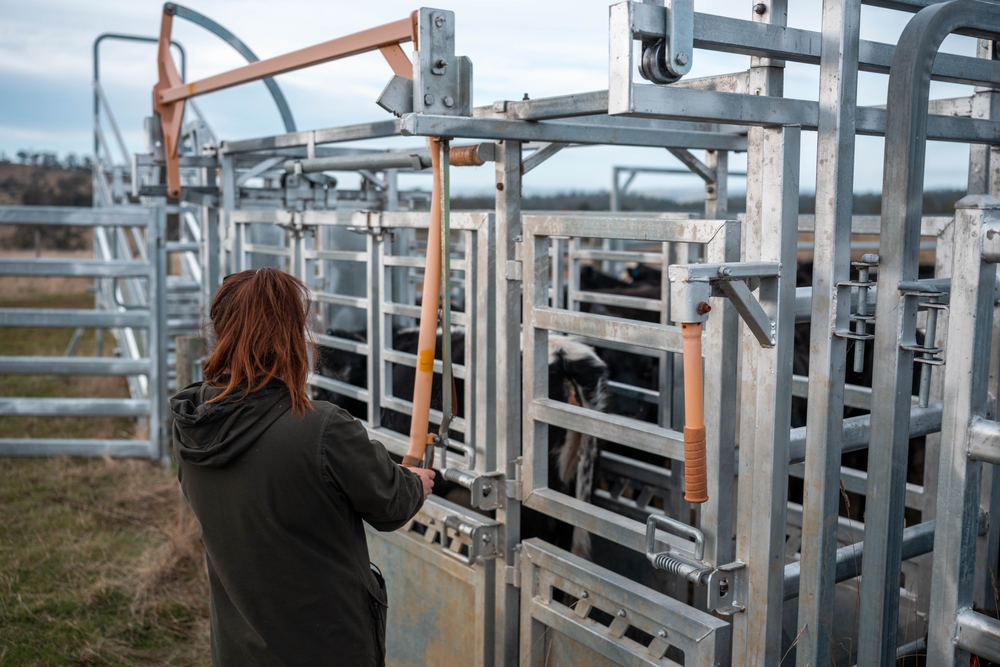
In either case, the scale should fit the handling system. Cattle flow, gate placement, alley dimensions, available space, and the surface beneath the scale can all affect how practical the setup is.
Signs a Portable Livestock Scale May Fit Your Operation
A portable livestock scale may be worth considering when weighing at a single permanent location creates unnecessary cattle movement, repeated hauling, or limitations on when and where weights can be collected.
Common signs include:
- Cattle are regularly worked at two or more separate pasture locations.
- Some working facilities are a significant distance from ranch headquarters.
- Animals are being transported primarily because the permanent scale is elsewhere.
- Seasonal grazing changes where cattle are gathered and processed.
- Weight information would be useful before cattle return to the main facilities.
- Existing corrals can accommodate a scale, but a permanent installation at every location is impractical.
- The ranch needs one weighing system that can serve several working sites.
For operations around Great Falls, the decision should reflect actual travel distances and the condition of the facilities where the scale will be used.
When to Talk With a Livestock Scale Professional
Talking with a livestock scale professional is useful when capacity, platform dimensions, mobility, installation conditions, or compatibility with existing cattle-handling equipment are unclear. These details can determine whether a scale that looks suitable on paper will work efficiently at several Montana locations.
Before ordering, ranchers should be ready to discuss the animals being weighed, anticipated maximum loads, chute or alley configuration, available setup surfaces, power conditions, frequency of moves, and how the equipment will be transported.
Photos and measurements of existing working facilities can also help clarify what type of configuration may be appropriate.
Common Challenges for Multi-Pasture Ranches
The most common portable weighing challenges involve site conditions, transportation, cattle flow, and exposure to Montana weather. A portable system needs to work as part of the entire handling process, not simply fit on a trailer or move between properties.
1. Uneven setup areas: Remote corrals may not offer the same prepared surface available at headquarters. Scale placement needs to account for the manufacturer’s installation requirements.
2. Long travel distances: A system that is technically movable may still be inconvenient if relocation requires excessive disassembly or specialized equipment.
3. Existing handling layouts: Gates, alleys, chutes, and crowding areas can limit where a scale fits.
4. Weather exposure: North-central Montana equipment may encounter cold, snow, mud, wind, dust, and substantial seasonal temperature changes.
5. Limited power access: Remote working sites may have different electrical conditions than the main ranch facilities, making indicator and power requirements important considerations.
Preparing a Portable Scale for Seasonal Use
Preparing a portable scale for seasonal use means inspecting the system before cattle-working periods, choosing appropriate setup locations, and following the manufacturer’s procedures for transportation, installation, calibration, and operation.
Before moving the system, inspect accessible components for visible damage and confirm that cables, connectors, indicators, and related equipment are protected for transport. At the destination, make sure the site satisfies the equipment’s setup requirements before weighing cattle.
Ranchers should also plan where cattle will enter and exit. A convenient scale location that creates poor cattle flow may slow the entire working process.
DIY checks should remain limited to routine inspection, cleaning, setup, and maintenance permitted by the manufacturer. Calibration, repairs, or electrical work outside normal operator procedures should be handled by qualified personnel.
What Results Should Ranchers Expect?
A properly selected portable livestock scale should make weighing available at more of the locations where cattle are already handled. The practical result is greater flexibility in collecting weight information without making a permanent scale installation at every pasture or working facility.
Portability does not eliminate setup requirements. Ranchers still need an appropriate weighing location and must operate and maintain the equipment correctly.
The goal is a system that fits existing ranch workflow while providing dependable weight information for the tasks the operation actually performs.
Common Portable Livestock Scale Mistakes
The biggest portable scale mistakes happen when buyers focus on capacity alone and overlook the conditions surrounding transportation, setup, and daily cattle handling.
Mistake: Choosing solely by maximum capacity.
Consequence: The scale may handle the weight but fit poorly into the existing alley or chute system.
Better approach: Evaluate dimensions, cattle flow, capacity, and installation needs together.
Mistake: Assuming any flat-looking ground is adequate.
Consequence: An unsuitable setup can affect operation and repeatability.
Better approach: Follow the manufacturer’s site and installation requirements at every location.
Mistake: Ignoring transportation logistics.
Consequence: A supposedly portable system may be difficult to move as often as planned.
Better approach: Decide how frequently the scale will relocate before selecting a configuration.
Mistake: Forgetting Montana weather exposure.
Consequence: Indicators, cables, and other components may face avoidable exposure.
Better approach: Plan for protection, storage, and maintenance appropriate to local conditions.
A Common Great Falls Area Ranch Scenario
A common Great Falls area scenario is a ranch with a primary set of working facilities near headquarters and additional cattle on seasonal or leased pasture elsewhere in Cascade County. The ranch wants weight information at more than one point during the grazing season but does not need a permanent scale at every location.
A portable livestock scale can provide another option. The equipment can be selected around the ranch’s existing handling arrangements and moved according to the operation’s schedule, provided each location can meet the scale’s setup requirements.
This is a representative scenario, not a specific Rockwell Scales customer case study.
Portable Livestock Scale Solutions
Portable livestock scale solutions should be selected around the ranch’s cattle, handling facilities, weighing goals, and transportation requirements. The appropriate system may include a livestock weighing platform, load-cell components, an indicator, and other equipment suited to the specific configuration.
At Rockwell Scales, we can discuss the intended application before equipment is ordered. That conversation is especially valuable for ranches trying to serve several working locations with one weighing system.
Portable vs. Permanent Livestock Scales
Portable and permanent livestock scales solve different operational problems, with portable equipment emphasizing flexibility and permanent installations emphasizing a dedicated weighing location.
A permanent system can make sense when most cattle consistently pass through one central facility. A portable system may be more useful when cattle are routinely worked at separate pastures or corrals.
Some ranches may benefit from a combination of both approaches. The decision should be based on cattle movement, frequency of weighing, facility layout, transportation requirements, and the number of working locations rather than portability alone.
Service Areas Around Great Falls
Portable livestock weighing equipment can be relevant to ranch operations in Great Falls and surrounding north-central Montana communities, including areas around Belt, Vaughn, Ulm, Sun Prairie, and the broader Cascade County region. Operations extending toward Fort Benton and neighboring agricultural areas may face similar multi-location weighing needs.
The right equipment configuration should reflect the actual distances, facilities, and operating conditions of each ranch.
The Cost of Delaying a Better Weighing Setup
Delaying a more practical weighing setup can leave a ranch dependent on unnecessary animal movement or limited opportunities to collect weight information. The actual impact varies by operation, but extra handling, hauling, labor, and scheduling can add friction when cattle and weighing equipment are far apart.
Evaluating the problem before the next major cattle-working period gives ranchers time to compare configurations and determine what will fit existing facilities.
FAQ
Are portable livestock scales useful for ranches around Great Falls, MT?
Yes, portable livestock scales can be useful for Great Falls area ranches that work cattle at multiple corrals, pastures, or leased properties. Their main advantage is flexibility. Instead of installing a permanent scale at every site, a ranch may be able to move one weighing system between suitable working locations.
Can a portable cattle scale be moved between pastures in Cascade County?
Yes, depending on the scale design and site conditions, portable cattle weighing equipment can be moved between working locations in Cascade County. Ranchers should consider how the scale is transported, how frequently it will move, what equipment is needed for setup, and whether each destination meets the manufacturer’s installation requirements.
What should a Montana rancher check before ordering a livestock scale?
Montana ranchers should check required capacity, platform dimensions, cattle flow, existing chute or alley dimensions, setup surfaces, transportation plans, power availability, weather exposure, and frequency of use. Providing these details before ordering helps narrow the options to equipment that fits the ranch’s actual operating environment.
Does moving cattle across Montana county lines involve special requirements?
Yes. The Montana Department of Livestock states that brand inspection is generally required for cattle and horses before crossing a county line, with specific permits and exceptions available for qualifying situations. Ranchers should verify the current requirements for their particular movement rather than relying on scale selection or weighing records as a substitute.
Can portable livestock scales handle Montana winter conditions?
Some livestock scales are designed for demanding agricultural environments, but suitability for Montana winter conditions depends on the specific equipment and manufacturer requirements. Ranchers near Great Falls should consider cold temperatures, snow, moisture, mud, storage, cables, indicators, and setup surfaces when evaluating a system for year-round or shoulder-season use.
Where should a portable livestock scale be set up?
A portable livestock scale should be installed on a site that meets the manufacturer’s requirements and allows cattle to enter and leave safely and efficiently. Remote ranch locations may require more preparation than a permanent headquarters facility, so surface condition and cattle flow should be evaluated before the scale is moved into place.
Is a portable livestock scale better than a permanent scale?
Neither option is universally better. Portable scales are useful when weighing needs move between locations, while permanent scales can be practical when cattle consistently pass through one central facility. For a multi-pasture Montana ranch, comparing how often cattle are weighed and where that work occurs can clarify which configuration makes more sense.
How often should a portable livestock scale be checked?
A portable livestock scale should be inspected according to the manufacturer’s maintenance and calibration guidance, especially after transportation or before important weighing periods. Ranchers should watch for visible damage, cable or connector issues, unusual readings, and setup problems. Professional service may be appropriate when readings become inconsistent or repairs are needed.
Make Weighing Work With Your Montana Ranch
A portable livestock scale can make weight collection more practical when cattle, pastures, and working facilities are spread across the Great Falls region. We can help you evaluate weighing equipment around the way your ranch actually moves and handles livestock.
Categorised in: Livestock Scales
This post was written by admin