Truck Scales in Montana – Choosing & Maintaining Heavy-Duty Truck Scales for Montana’s Agriculture, Mining & Freight Operations
November 25, 2026 8:19 pmWhen you’re moving thousands of bushels of grain, transporting livestock, or hauling aggregate across Montana, accurate weights aren’t something you can afford to guess. Every truckload represents valuable material, transportation costs, and operational responsibilities. Add Montana’s freezing winters, dusty work sites, and demanding agricultural seasons, and your weighing equipment has plenty to contend with. For businesses in Great Falls, MT, and throughout the state, choosing a truck scale that can handle those conditions is an important investment.
The best truck scales in Montana combine appropriate weighing capacity, durable construction, accurate measurement, and dependable long-term service. Agriculture, mining, and freight operations have different requirements, so selecting a scale involves evaluating vehicle dimensions, load frequency, installation conditions, and legal-for-trade requirements. Proper installation and ongoing maintenance are equally important for reliable performance.
Here’s what Montana equipment owners should understand:
- Different industries need different scales: Grain elevators in the Golden Triangle have different weighing demands than mining operations or freight terminals.
- Montana winters affect equipment: Freezing temperatures, frost movement, and ice buildup can create challenges for scale foundations and components.
- Commercial weighing requires compliance: Scales used for qualifying trade transactions must meet applicable Montana licensing, approval, and inspection requirements.
- Maintenance protects accuracy: Regular inspections, cleaning, and calibration help identify developing problems before they interrupt operations.
- Experienced manufacturing support matters: A properly designed and installed scale should match the site’s actual operating conditions rather than simply meet a catalog specification.
At Rockwell Scales, we’ve spent more than 40 years manufacturing and servicing American-made weighing equipment from our Great Falls home base. We provide heavy-duty truck scales, custom fabrication, professional installation, calibration, and maintenance for Montana’s agricultural, mining, transportation, and industrial operations.
Why Do Montana Businesses Need Heavy-Duty Truck Scales?
Montana businesses need heavy-duty truck scales because agricultural commodities, mined materials, and freight shipments often involve substantial loads that must be measured accurately and repeatedly. For operations in Great Falls, Cascade County, and surrounding regions, the equipment must also withstand harsh weather, demanding traffic, and seasonal changes in workload.
Accurate Weights Support Daily Operations
A grain elevator needs dependable measurements when receiving wheat or barley during harvest. Similarly, a gravel operation relies on accurate truck weights when loading material for commercial customers.
Incorrect measurements can affect inventory records, billing, transportation planning, and customer confidence. Even relatively small discrepancies become more significant when large quantities of material move through a facility every day.
For Montana trucking companies, accurate weighing also helps drivers assess their loads before traveling. However, determining whether a vehicle is legal for highway travel requires evaluating axle weights, axle spacing, permits, and applicable route restrictions in addition to total weight.
Durability Matters in Montana’s Climate
Montana’s climate puts weighing equipment through significant environmental changes. A scale near Havre may experience extended freezing conditions, while installations in central and eastern Montana face snow, ice, wind, dust, and large seasonal temperature variations.
These conditions can affect foundations, load cells, wiring, and moving clearances. Choosing equipment designed for the installation environment helps reduce unnecessary operating problems.
Which Truck Scale Is Right for Agriculture, Mining, or Freight?
The right truck scale depends on the vehicles being weighed, the materials being transported, and how frequently the equipment will operate. Montana businesses should consider platform dimensions, load capacity, traffic volume, and environmental conditions before choosing between standard heavy-duty models and custom configurations.
Agricultural and Grain Elevator Scales
Agricultural operations need equipment that can handle grain trucks, livestock trailers, and other vehicles involved in seasonal production. Harvest can bring concentrated traffic, making dependable throughput especially important.
For grain producers around Great Falls, Conrad, Shelby, and the Golden Triangle, truck scales help support receiving, shipping, and inventory management. Ranchers may also require additional livestock or portable weighing equipment for their operations.
We manufacture weighing systems for agricultural and livestock customers, including truck scales, cattle scales, and custom configurations.
Mining and Aggregate Scales
Mining operations often handle heavy equipment, abrasive materials, and frequent high-capacity loads. These conditions require careful attention to structural design and component protection.
Our Hulk Series and Crusher Series are among the heavy-duty options we can discuss with customers evaluating demanding industrial and mining applications. Specific capacities, dimensions, and configurations should be selected according to each site’s requirements.
For aggregate yards and mining operations around Billings, the Butte region, and other Montana locations, durability and serviceability are particularly important.
Transportation and Freight Scales
Freight operators need weighing equipment that supports efficient vehicle movement and accurate load documentation. The appropriate installation may include a full-length truck scale, axle weighing equipment, or additional ticketing and display systems.
Along Interstate 15, Interstate 90, and the Hi-Line transportation corridors, facilities handle different truck configurations and shipment requirements. Selecting equipment that accommodates those vehicles helps reduce operational interruptions.
What Makes a Truck Scale Durable Enough for Montana Winters?
A durable truck scale for Montana winters needs strong structural construction, an appropriately designed foundation, protected electronic components, and sufficient clearance for normal operation. Freeze-thaw cycles, frost heave, ice buildup, and heavy loads can affect performance when these conditions aren’t considered during design and installation.
Foundations and Frost Movement
A truck scale depends on stable support beneath the weighing platform. If surrounding soil expands, shifts, or settles, the scale may develop alignment or clearance problems.
This is particularly important in areas where freezing conditions extend well below the surface. Proper site evaluation helps determine suitable foundation requirements before installation begins.
Protection for Load Cells and Electronics
Load cells convert applied force into measurable electrical signals. Their accuracy can be affected by damage, moisture intrusion, wiring problems, or mechanical interference.
Industrial truck scales also depend on indicators and other electronic components. Regular inspection helps identify developing issues before they cause inconsistent measurements.
Heavy-Duty Structural Construction
Repeated loading places substantial demands on a truck scale’s deck and supporting structure. Equipment intended for frequent heavy loads needs to account for fatigue, wear, and operating conditions.
Our American-made heavy-duty scales are backed by a 20-year structural warranty. We also report zero structural failures across our manufactured scales, reflecting our long-standing emphasis on structural durability.
What Does NTEP Certification Mean for Montana Truck Scales?
NTEP certification means a weighing-device design has undergone evaluation under the National Type Evaluation Program and received the applicable Certificate of Conformance. For Montana businesses using truck scales in commercial transactions, this approval is an important part of meeting legal-for-trade requirements.
However, NTEP certification alone doesn’t automatically make an installation ready for commercial use. The Montana Department of Labor and Industry’s Weights and Measures Bureau also administers requirements involving device licensing, placement into service, inspection, and testing.
Our scales are designed for commercial weighing applications, and we provide installation and calibration support. We help customers understand the practical steps involved in preparing their equipment for use.
Understanding Montana Truck Weight Limits
Montana truck weight limits depend on more than a vehicle’s total weight. Axle configuration, axle spacing, road classification, permits, and posted restrictions can affect the amount a truck may legally carry.
The Montana Department of Transportation explains that standard single-axle and tandem-axle limits generally include 20,000 pounds and 34,000 pounds, respectively, subject to applicable rules and exceptions. Other gross-weight restrictions are determined using the state’s bridge formula and relevant permitting provisions.
A truck scale provides valuable weight information, but operators must still verify the specific requirements affecting their vehicles and routes.
What Should You Expect During Truck Scale Installation?
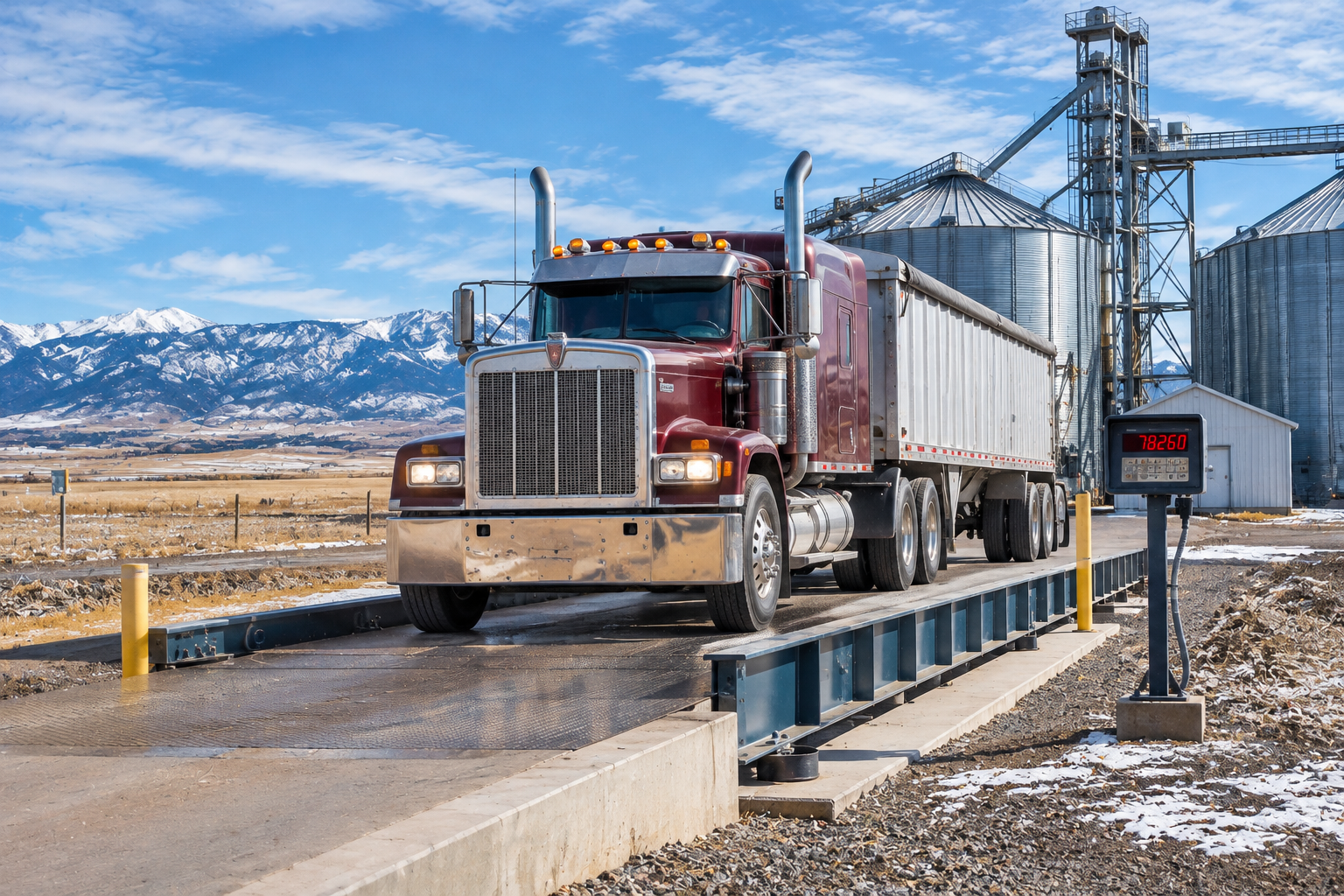
Truck scale installation generally involves consultation, site evaluation, foundation planning, equipment placement, electronic setup, calibration, and required commercial-service procedures. For businesses in Great Falls and surrounding rural communities, preparing the installation site correctly is essential for dependable long-term operation.
Step 1: Evaluate the Site and Application
We begin by discussing the vehicles, materials, traffic volume, and operational requirements involved. This helps determine suitable platform dimensions and weighing capacity.
Site conditions also influence whether an above-ground or pit-style installation is appropriate. Vehicle approach, drainage, soil stability, and accessibility deserve careful consideration.
Step 2: Prepare the Foundation and Install Equipment
Once the requirements are established, the installation proceeds according to the approved design. Proper placement and structural support are necessary for stable operation.
We provide professional installation services for industrial, agricultural, mining, and heavy-duty truck scales. Custom fabrication is also available when a standard configuration doesn’t suit the site.
Step 3: Configure and Test the Weighing System
After installation, the scale’s load cells, indicators, wiring, and related equipment must be configured and tested. Calibration helps identify measurement discrepancies and establish appropriate accuracy.
For commercial use, the applicable Montana placement-into-service and inspection requirements must also be satisfied. We can help customers plan for these steps during the installation process.
What Warning Signs Indicate Your Truck Scale Needs Service?
Common warning signs that a truck scale needs service include inconsistent readings, failure to return to zero, visible deck damage, and recurring electronic errors. For Montana businesses, ice accumulation, debris, moisture intrusion, and heavy traffic can also create conditions that warrant professional inspection.
Watch for these problems:
- Inconsistent weights: The same vehicle produces noticeably different readings under comparable conditions.
- Failure to return to zero: The indicator shows weight after the platform has been cleared.
- Damaged load cells or wiring: Visible deterioration affects critical components.
- Ice or debris buildup: Material accumulates beneath or around the scale deck.
- Unusual movement: The platform shifts or contacts surrounding structures.
- Indicator errors: The display produces recurring warnings or stops responding.
- Visible structural deterioration: Corrosion or damaged components become apparent during inspection.
These symptoms don’t necessarily mean the entire scale needs replacement. Professional troubleshooting can help identify whether cleaning, calibration, component repair, or more extensive work is appropriate.
How Often Should Truck Scales Be Maintained in Montana?
Truck scale maintenance in Montana should follow a schedule based on traffic volume, operating conditions, manufacturer guidance, and applicable inspection requirements. Annual professional maintenance is a useful starting point for many operations, while heavily used agricultural, mining, and freight scales may require additional attention.
Prepare for Winter Conditions
Before winter, inspect accessible areas for debris, drainage concerns, and damage. Snow and ice buildup can interfere with normal scale movement when material accumulates around the deck.
Operators should avoid practices that could damage load cells, wiring, or structural components. Appropriate professional maintenance helps prepare the equipment for freezing conditions.
Inspect After Heavy Use
Harvest season and intensive hauling can place significant demands on truck scales. Facilities should pay attention to unusual readings or physical damage following periods of concentrated traffic.
For grain elevators across the Golden Triangle and Hi-Line, scheduling maintenance around seasonal activity can help reduce avoidable downtime.
Keep Calibration Records Current
Calibration records help document testing and maintenance activity. They can also provide useful information when equipment begins producing inconsistent readings.
At Rockwell Scales, our maintenance services include inspections, testing, calibration, cleaning, and appropriate repairs. We offer ongoing service programs to support customers with frequently used weighing equipment.
Is It Better to Repair an Existing Truck Scale or Replace It?
Repair is often appropriate when a truck scale has a specific malfunction and the underlying structure remains serviceable. Replacement or a substantial upgrade may be more practical when the platform is extensively damaged, the equipment no longer meets operational needs, or repeated problems affect reliability.
A failed load cell, damaged indicator, or wiring problem may be addressed through component replacement. Older mechanical systems may also qualify for conversion to electronic weighing equipment.
However, major structural problems or persistent foundation issues require closer evaluation. The best decision depends on the scale’s condition and expected future use.
Our technicians provide load cell replacement, electronic repairs, deck replacement, calibration, and mechanical-to-electronic conversions. We help customers compare practical options rather than assuming every malfunction requires an entirely new system.
A Common Truck Scale Scenario in Montana’s Golden Triangle
A common Golden Triangle scenario involves a grain elevator preparing for harvest after a difficult winter. The existing truck scale has developed inconsistent readings, and debris has accumulated around parts of the weighing platform.
Rather than immediately replacing the equipment, the operator arranges an inspection. Professional testing may identify an electronic component problem, mechanical interference, or calibration issue that can be corrected before harvest activity increases.
This is an illustrative scenario rather than an actual customer project. It demonstrates how preventive maintenance and timely troubleshooting can support more dependable weighing operations.
Why Choose American-Made Truck Scales From Rockwell Scales?
American-made truck scales from Rockwell Scales offer Montana businesses equipment built with an understanding of regional industries, demanding loads, and harsh environmental conditions. Our manufacturing experience, custom fabrication capabilities, and statewide service support allow us to address both the equipment purchase and its long-term maintenance needs.
We’ve manufactured weighing equipment since 1980, with our family maintaining deep roots in Cascade County. Our heavy-duty products carry a 20-year structural warranty, and we report no structural failures across our manufactured scales.
We serve Great Falls, Havre, Helena, Bozeman, Billings, Missoula, Kalispell, and rural Montana communities. Our services extend from equipment selection and installation to calibration, repairs, and annual maintenance programs.
[Request a Free Truck Scale Quote]
Frequently Asked Questions About Truck Scales in Montana
What type of truck scale is best for Montana agricultural operations?
The best scale depends on the vehicles being weighed, the loads involved, and the facility’s traffic volume. Grain elevators near Great Falls may need full-length truck scales, while ranches may benefit from additional livestock weighing equipment. We can recommend configurations based on specific agricultural requirements.
Are Rockwell Scales truck scales NTEP certified?
Yes, our commercial weighing equipment is designed for NTEP-certified applications, and we offer NTEP-certified scale models. Montana also requires applicable licensing, placement into service, and inspection procedures for commercial weighing devices. Customers should confirm the approval details of their selected configuration.
How do freeze-thaw cycles affect truck scales in Montana?
Freeze-thaw cycles can affect foundations, surrounding soil, and scale clearances when moisture freezes and expands. Ice or debris may also interfere with platform movement. Proper installation, drainage, and maintenance help address these concerns in Great Falls and other northern Montana communities.
How often should an industrial truck scale be calibrated?
Calibration frequency depends on equipment use, operating conditions, accuracy requirements, and applicable rules. Annual professional maintenance is a reasonable starting point, while high-volume operations may benefit from additional checks. Montana’s commercial weighing requirements also include inspection and licensing obligations.
Can truck scales be custom-built for mining operations?
Yes, we offer custom scale fabrication for operations that need specialized dimensions, weighing capacity, or configurations. Mining and aggregate facilities may require equipment designed for repeated heavy loads and abrasive working environments. Our team can discuss Hulk Series, Crusher Series, and other suitable options.
Do you install truck scales outside Great Falls?
Yes, we provide truck scale installation and service throughout Montana, including Billings, Missoula, Helena, Bozeman, Havre, and rural communities. Our Great Falls manufacturing base supports customers statewide. We also work with agricultural, transportation, and mining businesses beyond Montana.
What does a 20-year structural warranty cover?
Our manufactured heavy-duty scales carry a 20-year structural warranty, reflecting our emphasis on durable construction. Actual warranty coverage depends on the applicable written terms, including any exclusions and conditions. We recommend reviewing those details when comparing scale models.
Can an existing truck scale be repaired instead of replaced?
Yes, many truck scale problems can be addressed through component repairs, calibration, or appropriate upgrades. We service load cells, indicators, electronics, decks, and older mechanical systems. An inspection helps determine whether repair is practical or whether replacement would better serve the operation.
Keep Your Montana Operation Moving With Rockwell Scales
From grain elevators in the Golden Triangle to mining sites, ranches, and freight terminals throughout Montana, reliable truck scales play an important role in daily operations. Choosing the right equipment involves understanding more than load capacity alone, especially when harsh winters, heavy traffic, and legal-for-trade requirements affect long-term performance. At Rockwell Scales, we’ve spent more than 40 years manufacturing American-made scales and supporting the businesses that depend on them. Our heavy-duty products, custom fabrication capabilities, professional installation, calibration services, and maintenance programs are designed around practical operational needs. Whether you’re planning a new installation, upgrading an older scale, or addressing performance concerns, we’re here to help you understand your options and select equipment suited to your working environment.
Categorised in: Truck Scales
This post was written by admin