Investing in Livestock Scales: Long-Term Benefits for Utah Operations
May 22, 2026 5:26 pm 3 CommentsFor ranchers and farm operators across Utah, every purchasing decision carries weight, both literally and financially. The rugged terrain of the state, from the red rock mesas of the south to the sweeping grasslands of the north, demands equipment that can keep up with the demands of serious livestock production. When it comes to farm equipment that delivers consistent, measurable returns, few investments rival a quality cattle scale.
Whether you are managing a small family operation in Cache Valley or running thousands of head through a commercial feedlot near Millard County, the case for investing in a reliable livestock scale is compelling, practical, and backed by real-world results.
Why Accurate Weighing Is the Foundation of a Profitable Operation
At the heart of any successful livestock operation is data, and weight data is among the most critical. Knowing the precise weight of your cattle at various stages of development allows you to make smarter decisions about feed allocation, health interventions, and market timing. Without a dependable cattle scale on-site, producers are left guessing, and guessing in the livestock business costs money.
Inaccurate weight estimates can lead to overfeeding, which inflates your feed costs, or underfeeding, which stunts growth and delays your animals reaching market weight. Either scenario eats into your margins. A quality livestock equipment investment eliminates that guesswork by giving you real, actionable numbers every single time you run an animal across the platform.
Utah ranchers also deal with unique seasonal pressures. The transition from summer grazing to winter feeding is a critical period when body condition scores and weights need to be closely monitored. A cattle scale integrated into your operation makes it possible to assess your herd before winter sets in, allowing you to cull animals that are unlikely to be cost-effective to carry through the cold months. That kind of informed decision-making is only possible when you have reliable weight data at your fingertips.
Understanding the ROI of a Cattle Scale in Utah
The ROI on a cattle scale investment becomes apparent relatively quickly for most operations. The upfront cost of farm equipment like a quality livestock scale can range from a few thousand dollars for a basic portable unit to significantly more for a heavy-duty permanent installation with digital load cells and data management software. However, when you break down what accurate weighing saves you over the course of a production year, the numbers make a strong argument.
Consider feed costs alone. Feed is typically the single largest expense in a cattle operation. If a producer is managing 200 head and overestimating weights by even 25 to 30 pounds per animal, the resulting feed waste over a full production cycle adds up to a meaningful financial loss. A livestock equipment investment in a reliable scale pays for itself by trimming that waste.
Beyond feed savings, a cattle scale also supports better revenue generation at sale time. Buyers pay by the pound, and ranchers who know their exact weights walk into sale negotiations with confidence. There is no need to accept a lowball estimate when you have documented, verified weights backing your asking price. For Utah producers who sell through local auction yards or direct-to-packer arrangements, this kind of leverage matters.
Veterinary and health management costs also benefit. When animals are weighed regularly, producers can detect weight loss early, a key indicator of illness or parasite load. Catching health issues early means lower treatment costs and fewer losses. Over several production cycles, the cumulative savings from proactive herd health management make the ROI on a cattle scale even more attractive.
The Right Farm Equipment for Utah’s Terrain and Climate
Not all livestock scales are created equal, and Utah’s diverse geography means operators need to think carefully about which type of scale suits their specific environment. Utah’s climate ranges from arid desert conditions in the southwest to alpine temperatures in the mountain valleys of the north and east. Farm equipment that performs well in one environment may struggle in another.
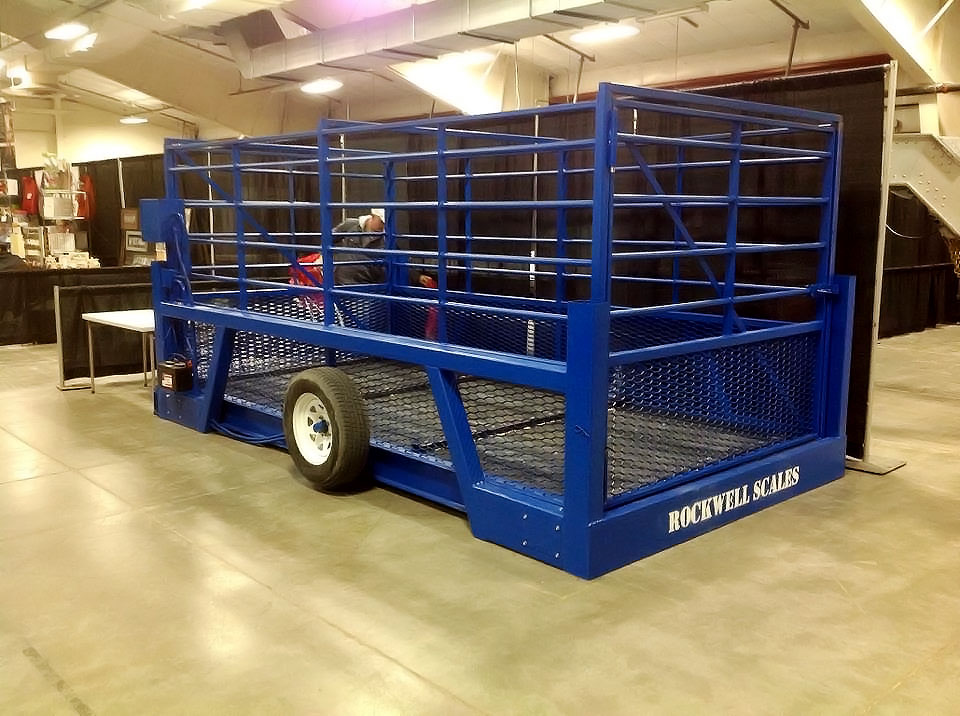
For producers in drier, warmer parts of the state, portable platform scales made of galvanized steel or powder-coated materials offer excellent durability without excessive maintenance. These units can be moved between grazing areas and corrals as needed, adding operational flexibility that fixed installations cannot match.
For larger operations, particularly those in higher-elevation areas with more permanent infrastructure, a built-in alleyway scale system with electronic load cells and a digital indicator is often the smarter long-term livestock equipment investment. These systems are built to handle high-volume throughput, reduce sorting time, and integrate with herd management software, making record-keeping far more efficient.
Utah producers should also factor in the performance of their scale during cold months. Load cells and digital indicators can be sensitive to extreme cold if not properly rated, so selecting equipment with the appropriate temperature specifications is important. Investing in quality farm equipment that is rated for your specific operating conditions will extend the lifespan of your scale and protect your investment for years to come.
How Livestock Equipment Investment Supports Long-Term Herd Improvement
Beyond the immediate financial benefits, a livestock equipment investment in quality weighing technology supports the long-term genetic and productive improvement of your herd. Serious cattlemen know that performance data is the backbone of a disciplined breeding program. Average daily gain (ADG), weaning weights, and yearling weights are all metrics that rely on accurate scale readings to be meaningful.
Utah producers who are enrolled in breed association programs or who market registered seedstock understand this better than most. Accurate weight records, collected consistently over time, allow you to identify your top-performing animals and make breeding decisions that compound in value over successive generations. A cattle scale is not just a tool for today’s sale, it is a data-collection instrument that shapes the trajectory of your entire operation.
Producers who participate in retained ownership programs or who background their own calves through the growing phase also benefit significantly. Tracking gains from weaning through finishing requires consistent, reliable weighing at multiple intervals. Without dependable farm equipment to collect that data, retained ownership becomes a guessing game rather than a strategic advantage.
The livestock industry in Utah is also evolving. More buyers, particularly those supplying natural and premium beef programs, are demanding verifiable production data from sellers. Having documented weight histories and gain records positions Utah producers to access these higher-value markets, turning their livestock equipment investment into a competitive differentiator.
Choosing the Right Partner for Your Cattle Scale Investment
Selecting the right cattle scale involves more than just choosing a product off a shelf. Utah producers benefit from working with dealers and manufacturers who understand the specific demands of western ranching. Look for suppliers who offer on-site installation support, calibration services, and responsive parts availability. A scale that goes out of calibration during a busy weigh day is not just an inconvenience; it is a liability.
Warranty coverage and customer support should factor heavily into your purchasing decision. Farm equipment is a long-term commitment, and knowing that your supplier will be there when something needs adjustment or repair gives you peace of mind that justifies the investment. Ask about service networks in Utah specifically, since response times matter when your operation depends on the equipment functioning correctly.
Financing options are also worth exploring. Many farm equipment suppliers offer payment plans or seasonal billing structures that align with the cash flow realities of livestock production. Spreading the cost of a cattle scale over time makes the livestock equipment investment more accessible, particularly for smaller operations working within tighter capital budgets.
Conclusion
A cattle scale is not a luxury for Utah livestock producers; it is a practical tool that drives measurable returns across feed management, herd health, market readiness, and long-term genetic improvement. The ROI is real, the operational benefits are substantial, and the competitive advantages compound over time. For any Utah operation serious about profitability and sustainability, investing in quality livestock equipment is a decision that pays dividends season after season.
Need Heavy-Duty Scales in Montana?
Welcome to Rockwell Scales! Rockwell Scales has been a premium retailer and service provider all over the world since 1980. We are a full-service company that installs, repairs, and builds scale systems. Our highly trained and specialized team is available for agricultural, industrial, and mining scale setup. We offer a wide array of sizes, brands, accessories, and weight limits. Rockwell Scales has many repeat customers and places customer service as a top priority. We use the best equipment available, ensuring a high-quality job. Give us a call today to make an appointment!Categorised in: Livestock Scales
This post was written by admin